Are you getting the most out of your existing content? Most businesses spend time writing blog posts and then leave them to sit on their website, barely noticed. That’s a missed opportunity.
Repurposing content gives it a second life. Old blog posts can become social media updates, short videos, or refreshed guides that reach new audiences and keep your marketing working harder. It’s a simple way to save time, extend the lifespan of your content, and get better results across your channels.
In this guide, we’ll show how repurposing your content can help you work smarter and get more value from what you’ve already created. Whether you’re looking to improve SEO, reach more people on social media, or build a stronger content marketing plan, there are practical steps you can take today.
| Get in Touch |
Why Most Blogs Struggle to Get Traffic
Creating blog content is easy. Getting people to actually see it is the hard part. Many businesses publish posts and then hope for the best, but that approach rarely works. Without a plan to update, optimise, or promote content, even well-written blogs can go unnoticed.
The Problem With Publishing and Forgetting
Once a blog is live, it often sits on a website without any further attention. Search engines favour content that is updated and actively promoted, so old posts that aren’t refreshed can quickly slip down the rankings. At the same time, audiences rarely return to older posts unless they are shared again in a meaningful way. Publishing and forgetting means your content never reaches its full potential, leaving valuable marketing opportunities on the table.
Why More Content Doesn’t Always Mean More Traffic
It’s tempting to think that producing more posts will automatically bring more visitors, but quantity doesn’t guarantee results. Without a clear strategy, new blogs can dilute your focus, compete with each other for the same keywords, and fail to gain traction. Effective content marketing relies on relevance, quality, and promotion, not just volume. Focusing on improving and repurposing existing content often delivers faster and more sustainable results.
The Hidden Value in Existing Content
Older blog posts can be more valuable than you realise. Even content that underperformed initially may contain evergreen insights, strong ideas, or data that can be updated. Repurposing these posts into refreshed articles, social media snippets, or video content can breathe new life into them. Leveraging existing content not only saves time and resources but also strengthens your overall marketing strategy, creating multiple opportunities for audience engagement across different channels.
Why Repurposing Content Is the Fastest Way to Grow Traffic
Creating new content takes time and resources, and even then there’s no guarantee it will reach the right audience. Repurposing content is a smarter approach because it builds on what already works. Existing posts, guides, or case studies can be refreshed, reformatted, and shared across multiple channels to maximise reach and impact.
Work With Proven Content
Repurposing starts with content that has already shown potential. Posts with steady traffic, high engagement, or valuable insights provide a solid foundation for updates. Instead of guessing what your audience wants, you can focus on improving content that already resonates, which often leads to faster results than starting from scratch.
Improve SEO Performance
Refreshing existing content can boost search engine rankings. Updating statistics, adding new information, and refining keyword targeting signals to search engines that the content is current and relevant. Even small improvements can have a big impact, helping your blogs perform better over time without needing an entirely new post.
Save Time and Resources
Repurposing reduces the effort required to create new content while extending the value of what you already have. Turning one blog post into multiple formats, such as social posts, videos, or newsletters, gives you more assets from the same base content. This approach allows you to reach different audiences without constantly creating from scratch.
Expand Reach and Engagement
Repurposed content can reach people who may have missed it the first time. Sharing content across social media, email campaigns, and video platforms ensures it appears where your audience spends their time. It also gives you more opportunities to engage with users in different formats, increasing the overall impact of your marketing efforts.
Maximise Content Lifespan
Content doesn’t have to lose relevance after a few months. Repurposing keeps your posts alive longer, allowing them to continue attracting traffic and generating engagement. Over time, this builds a library of multi-format content that strengthens your brand presence and provides consistent value across channels.
How to Repurpose Old Blog Content Across Multiple Channels
Repurposing old content is one of the smartest ways to get more value from what you’ve already created. Instead of starting from scratch, you can refresh posts, adapt them for new formats, and reach different audiences across social media, email, and video. This approach saves time, extends the life of your content, and helps your marketing work harder without adding extra workload.
Start by Identifying Content Worth Repurposing
Not every blog post needs to be repurposed, so it’s important to focus on content with the most potential. The aim is to find posts that already have value and can be strengthened, adapted, or shared in new ways to reach a wider audience.
Start by reviewing your existing content and looking for posts that show signs of performance or relevance. This could include content that attracts steady traffic, generates engagement, or covers topics that remain useful over time. Even posts that didn’t perform as expected can still be valuable if the core idea is strong.
When identifying content to repurpose, look for:
-
Posts with consistent traffic or engagement
-
Evergreen topics that remain relevant
-
Content with useful insights, data, or advice
-
Blogs that can be broken down into smaller content pieces
The goal is to work with content that already has a foundation. With the right updates or format changes, these posts can become much more effective and reach audiences beyond your website.
Turn Blog Posts into Short-Form Social Content
Short-form social content is one of the simplest and most effective ways to repurpose blog posts. Breaking down key ideas into smaller, digestible pieces makes your content easier to consume and more likely to be shared.
Instead of promoting a full blog post in one go, you can extract multiple pieces of content from it. Each section, tip, or insight can become its own post, giving you more opportunities to engage your audience across different platforms.
You can approach this by:
-
Turning key points or tips into individual posts
-
Creating carousel posts or threads that summarise blog content
-
Using statistics, quotes, or insights as standalone graphics
-
Breaking longer guides into a series of related posts
Social media also allows you to present content in a more engaging and conversational way. Adjusting the tone, format, and structure for each platform helps your content feel more natural and increases the chances of it resonating with your audience.
Convert Blog Content into Video Content
Video is one of the most effective ways to extend the reach of your existing content. A single blog post can be broken down into multiple short videos, each focusing on a specific point or idea. This makes your content more engaging and accessible, particularly for audiences who prefer watching over reading.
You don’t need a complex setup to get started. Focus on pulling out key sections from your blog and turning them into clear talking points. These can be used for short-form videos on platforms like LinkedIn or Instagram, or combined into longer, more detailed explainer content.
Consider how your content can be adapted visually:
-
Turn tips or key points into short talking-head videos
-
Break down step-by-step guides into quick tutorials
-
Highlight key insights as standalone clips
This approach allows you to create multiple pieces of content from a single blog, helping you reach wider audiences without starting from scratch.
Expand Blog Posts into Long-Form or Pillar Content
Repurposing isn’t always about shortening content. In some cases, expanding your blogs into more detailed resources can deliver stronger results. Combining related posts into a single, in-depth piece can improve both user experience and search performance.
Start by identifying blogs that cover similar topics or themes. These can be updated, expanded, and structured into a comprehensive guide that offers more value than individual posts on their own. This helps position your content as more authoritative and useful.
You can approach this by:
-
Merging related blog posts into one complete guide
-
Adding new insights, data, or examples to strengthen the content
-
Improving structure with clear headings and internal links
Long-form content also supports your wider SEO strategy. It creates a central piece of content that other blogs can link to, helping to build authority and keep users engaged for longer.
Use Blog Content for Email Marketing
Email marketing is another effective way to repurpose blog content and keep your audience engaged. Instead of creating new material for every campaign, you can reuse existing blog insights and present them in a more direct and personalised format.
Blog content can be adapted into newsletters that highlight key points, share useful advice, or direct readers back to your website. This keeps your content visible and gives subscribers a reason to return to your site.
You can approach this by:
-
Summarising blog posts into short, engaging email content
-
Highlighting key insights or takeaways
-
Linking back to the full blog for more detail
-
Repurposing multiple blogs into themed email campaigns
Turn Testimonials and Insights into Social Proof
Blog content often includes valuable insights, results, or client feedback that can be repurposed into social proof. These elements help build trust and show potential customers the value of your services in a clear and engaging way.
Instead of leaving testimonials or results within longer blog posts, you can extract them and present them as standalone content. This makes them more visible and easier for your audience to engage with.
You can repurpose this content by:
-
Turning testimonials into social media posts or graphics
-
Highlighting key results or case study insights
-
Sharing quotes that demonstrate expertise or success
-
Creating short-form content focused on client outcomes
Using social proof across different channels reinforces credibility and helps support your wider marketing efforts.
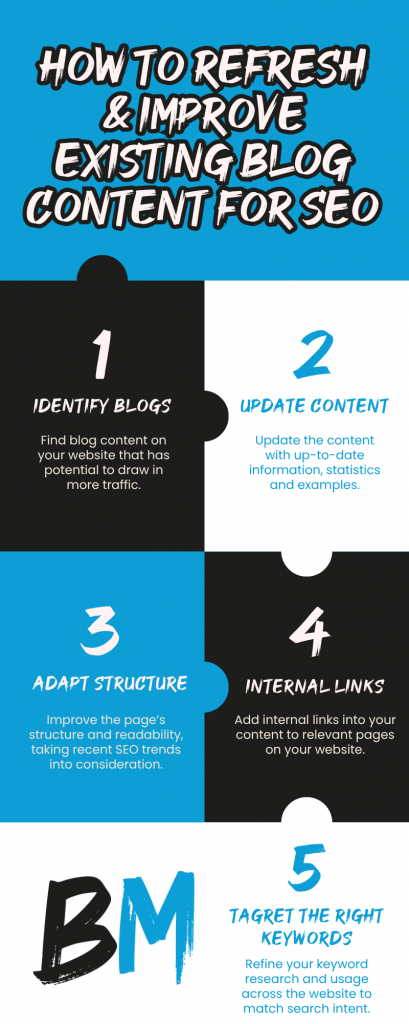
Refresh and Improve Existing Blog Content for SEO
Repurposing content is not only about changing the format. Updating and improving your existing blog posts is just as important for maintaining performance and visibility.
Refreshing content helps ensure it remains relevant, accurate, and aligned with current search trends. Small updates can make a noticeable difference to how your content performs in search results.
You can improve existing content by:
-
Updating outdated information, statistics, or examples
-
Improving structure and readability
-
Adding internal links to related content
-
Refining keyword usage to better match search intent
Adapt Content for Each Platform
Repurposing content works best when it is tailored to each platform rather than simply reused in the same format. Different channels have different audiences, expectations, and content styles, so adapting your content is key to improving engagement.
A blog post might work well as a detailed guide on your website, but the same content needs to be shortened, simplified, or made more visual for social media. Adjusting how your content is presented ensures it feels natural and relevant wherever it appears.
You can do this by:
-
Changing tone and structure depending on the platform
-
Adjusting content length to suit audience behaviour
-
Using visuals or video where appropriate
-
Focusing on platform-specific engagement styles
Creating a Content Marketing Plan That Scales
Repurposing content works best when it’s part of a clear content marketing strategy. Without a plan, content can feel scattered, and opportunities to reach new audiences or maximise value from existing posts can be missed. A content marketing plan helps you organise, schedule, and measure your efforts so every piece of content contributes to your goals.
Audit and Organise Your Existing Content
Knowing what content you already have is the first step. An audit shows you which posts are performing well, which need updating, and which can be repurposed.
Focus on:
-
Identifying high-performing posts with steady traffic or engagement
-
Flagging evergreen topics that remain relevant
-
Highlighting content that can be broken into multiple formats or channels
-
Noting outdated posts that could be refreshed with new data or insights
Plan Repurposing Across Channels
Once your content is organised, map it to the platforms where your audience spends time. Each piece of content can have multiple lives: a blog post can become social posts, short videos, email snippets, or even part of a long-form guide.
When planning, consider:
-
Which content formats work best on each platform
-
How often content should be shared or updated
-
Which audiences are most likely to engage with each type of content
Set Goals and Measure Performance
Goals give your content purpose. Without them, it’s hard to know whether repurposing is delivering results. Define what success looks like for each piece of content, whether it’s increased traffic, social engagement, or leads.
Track performance by:
-
Monitoring traffic and engagement metrics for repurposed blog posts
-
Measuring social interactions, shares, and comments
-
Reviewing click-through rates from emails or newsletters
-
Analysing conversion rates for content-driven campaigns
Key Takeaways for Repurposing Blog Content
-
Repurposing content gives blog posts a second life, helping reach new audiences and increasing visibility across multiple channels.
-
Focus on content with proven potential: posts with steady traffic, engagement, evergreen topics, or strong ideas that can be broken down.
-
Short-form social content is highly effective, including tips, stats, quotes, carousel posts, or threads that summarise blog insights.
-
Video content allows blogs to be adapted into multiple formats, such as short tutorials, talking-head clips, or longer explainer videos.
-
Expanding existing blogs into long-form or pillar content strengthens authority, improves SEO, and provides a central resource for internal linking.
-
Email marketing can reuse blog content to keep subscribers engaged and encourage return visits to your website.
-
Testimonials, case studies, and insights can be repurposed into social proof, building trust and demonstrating expertise.
-
Refreshing blogs with updated stats, examples, and keywords improves search engine performance and relevance.
-
Adapting content for each platform ensures it resonates with the audience, taking into account tone, structure, and visuals.
-
Repurposing reduces workload and maximises ROI by generating multiple content assets from the same base material.
-
A clear content marketing plan helps organise, schedule, and track repurposing efforts across channels.
-
Regularly auditing and measuring performance ensures content continues to deliver value and informs future repurposing decisions.
FAQs
How to Get My Blog Noticed?
Getting your blog noticed starts with promoting it across multiple channels and ensuring it’s optimised for search engines. Sharing content on social media, updating old posts, and using email campaigns can increase visibility, while optimising headlines, keywords, and meta descriptions helps your blog rank higher in search results. Consistently publishing valuable, relevant content also builds authority and encourages organic traffic.
What Is Quality Content for SEO?
Quality content for SEO provides value to readers while meeting search engine standards. It is well-researched, easy to read, relevant to your audience, and includes natural use of keywords. Good SEO content also incorporates internal and external links, up-to-date information, and clear headings, helping search engines understand the topic and rank it effectively.
How to Create Engaging Content?
Engaging content captures attention, encourages interaction, and provides value to your audience. This can be achieved through clear structure, compelling headlines, visuals, storytelling, and practical takeaways. Tailoring content to the platform and audience preferences also helps, whether it’s short-form social posts, long-form blogs, or videos.
How to Reuse Old Content?
Old content can be reused by updating information, repurposing it into new formats, or sharing it on different channels. Examples include turning blog posts into social media snippets, videos, email campaigns, or long-form guides. Reusing content helps extend its lifespan, reach new audiences, and improve ROI without creating entirely new material from scratch.
What Does Repurpose Mean in Social Media?
Repurposing in social media means taking existing content and adapting it for new formats or channels to reach a wider audience. For example, a blog post can become a carousel post on LinkedIn, a short video on Instagram, or a series of tweets. Repurposing makes content more versatile and ensures it works across different platforms.
What Is an Example of Repurposing Content?
An example of repurposing content is taking a detailed blog post about content marketing and creating multiple assets from it. You could extract key tips for social media posts, turn statistics into a video, convert insights into an email newsletter, and combine related blogs into a comprehensive guide. This approach maximises the value of a single piece of content.
Make Your Content Work Harder With Breakout Media
Repurposing your existing content is one of the smartest ways to get more value from the work you’ve already done. From refreshing blog posts for SEO to creating short videos, social media snippets, and email campaigns, there are countless ways to reach new audiences, save time, and strengthen your marketing strategy.
At Breakout Media, we help businesses transform their existing content into multi-channel assets that deliver real results. Whether you want to improve SEO performance, expand your reach on social platforms, or create a content marketing plan that scales, our team can guide you every step of the way.
Start maximising the potential of your content today. Get in touch with Breakout Media to see how we can help your marketing work smarter, not harder.
| Read More on SEO |