In this blog, I’m going to talk you through how you can create a solid website structure. One that not only works for your users but for search engines, too, so that you can make more money from your online presence.
If you’re struggling to get leads, enquiries and sales from your website, this video will be perfect for you. Whether you’re a business owner or a marketer in charge of a site, having a solid website structure is one of the important foundations of not just SEO but succeeding online.
This blog will show you how to structure your site in a way that users and search engines love that’ll set you up for generating more business.
So, let’s get into it!
What Is A Website Structure?
So before we start, let’s understand exactly what we mean by ‘website structure’. This is, put simply, the way your content is organised and presented. That’s it!
Your website structure acts as a framework or skeleton that helps ensure that everything is connected where it should be. It determines the hierarchy of your pages, the relationships between them and the general flow of information.
A website structure consists of these things;
- Your homepage
- The main navigation; Your primary menu that has links to your main pages
- Some subpages; Pages within sections or categories of your site that are more specific
- Internal links; These help connect pages that are related
.png)
When you organise your website in a way that makes sense, you make a nice and easy roadmap for everyone to follow. But why is this important?
The Importance of Website Structure
Putting time into creating a well-structured website is important for both SEO and the user experience. It’s one of the first things we look at as an SEO agency. By having your site flow easily in a way that people and robots can understand, you can provide smooth and seamless navigation throughout your site.
When you do this right, this can lead to higher visibility and better engagement. This is because Google’s spiders can crawl your website with ease, meaning that they know exactly how to rank it. You can’t expect them to rank content and pages that they have to go through a bazillion routes to try and find.
We all know that our attention spans aren’t what they used to be. We’re so used to having information right at our fingertips at exactly the moment we want it. That’s why by organising your website in a logical manner, you enable your visitors to find the information that they want quickly.
Having a good website structure works like this; Search engines recognise you more and rank you higher in the results pages. This means that more people looking for your services or product see you because you’re a hell of a lot more visible, your site is easy to use, so it encourages engagement and then bada-bing-bada-boom, more conversions come your way.
Sounds like a no-brainer, doesn’t it?
Key Elements of a Well-Structured Website
So to be able to create a structure that works, there are a few key things we need to remember moving forward. These are perfect prompts to ask yourself every time you are adding new content to your site.
- Is your navigation clear? Do your menus provide the links that they need to to ensure the user knows where they need to go quickly and easily?
- Is there a hierarchy to your content? Are you including the main, broad-level categories on your main menu? Do you have submenus for any supporting content that sits under these?
Let’s talk through an example of this. For a company that offers Insurance, a main menu item for them may be ‘Personal Insurance’, leading to a page about what they offer. A drop-down from this link may open a menu that has more specific pages that fall under that bracket, for example, Home Insurance, Life Insurance, Income Protection etc.
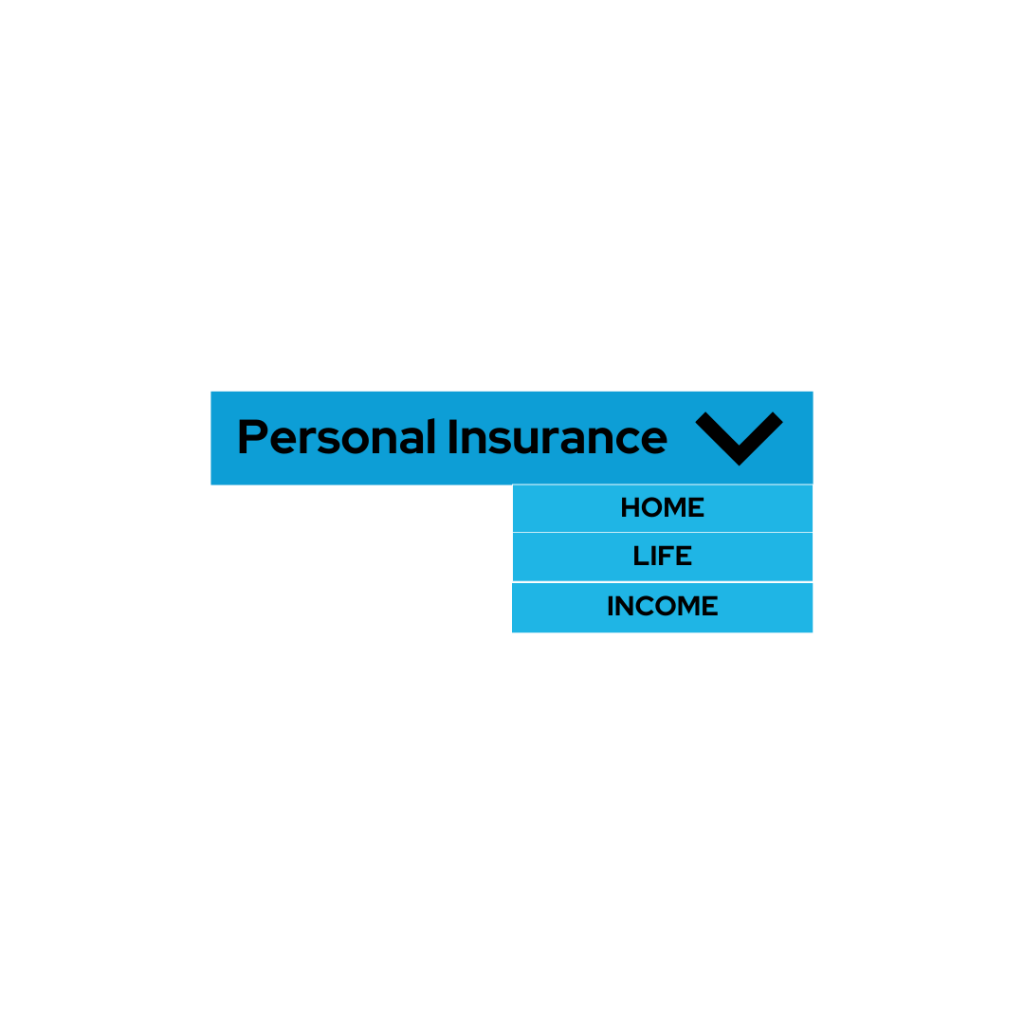
Those on the dropdown are one step down in the hierarchy of pages, they support the main element of the navigation as they are more specific.
One of the big mistakes we often see in SEO is people putting all of their services into one page. This makes that page a little bit relevant for everything you do. But by segmenting this out into supporting pages that are more specific, you’re telling Google and the users that each of these pages is hyper-relevant for that one thing.
How can we plan our website structure? The best and easiest way to do this is to visualise it, so I’ve done exactly that in the video below.
Let's Talk URL Structure
When creating content and new pages, you’ll be creating new URLs for your site. A URL is basically your website address and page identifier, and you’ll have a different one for every page.
These are important when it comes to your website structure and your user experience, so let’s take a look into how to create optimised URLs that help users and search engines.
- You want your URLS to be descriptive of the page it's for and keyword rich where possible. For example, if your page is about income protection, the URL would be /income-protection.
- On that note, only use hyphens to separate words! Don’t use underscores.
- Oh, and don’t include special characters or even capital letters. Keep everything lowercase and completely readable. /gh8wp is not a page anyone can understand!
- Keep them short and concise. Long strings of text can just be confusing for both search engines and users to read and understand.
- If you’re changing a URL (please only do this when necessary!), implement a 301 redirect. This means that the old link you’re changing will still take the user to the new page and not leave them lost in a world of 404s.
Just like we want the navigation of our pages and menus to be easy to understand, we want our URL structures to do the same. These all tie in with creating the best foundations for a strong website structure.
Enhancing Navigation and SEO through Internal Linking
Something else that ties into a solid website structure is internal linking. Adding internal links will be pivotal in helping search engines, and users understand the context of your pages and site. Internal links are exactly what they say on the tin, they are links from one of your pages that point internally to another page.
What internal links do is help connect related content to one another? So let's go back and use that Income Protection example to help explain this.
Say you have that Income Protection page, which is a landing page all about what your service is, why people should choose you and the benefits of income protection. But maybe as part of your content strategy, you’re writing a blog called ‘Why Self-Employed People Should Have Income Protection Insurance’. It’s a bit more niche and is targeting different keywords, so it warrants its own page, but what it can do is link back to the main Income Protection landing page. This shows Google that these pages are related and that the blog is supporting content to the larger page.
One thing you’ll want to do here is make sure your anchor text is spot on. This is the actual text that people can click to go to the linked page. You’ll want to describe exactly where the link is taking them. So instead of linking ‘click here to go to this page’, you would add the link from the ‘Income Protection’ text.
Links always want to appear natural and within the context of the content. So don’t force it, only link where it is natural to do so.
What A Solid Website Structure Can Do
By creating a solid website structure that has easy-to-follow navigation, easy-to-understand URLS and a strong internal linking factor, you set yourself up for website success. It’s just the beginning of an SEO journey, but starting off on the right foot is important, isn’t it?
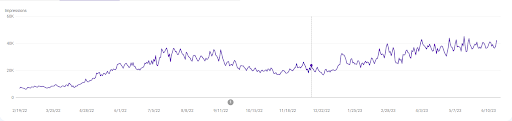
Look at this graph. 16 months ago, this client was getting around 7000 impressions a day in the search results. We analysed their keywords, built out their navigation menu, created sub-categories and supporting blogs with internal links and boom. Now they’re receiving 40,000 impressions a day. That’s almost a 500% increase in visibility!
At Breakout Media, we’re all about providing long-lasting results for our clients. Just like a solid-website structure is what you need to build out a fantastic, lead-generating, high-converting website, there are many other parts of the SEO puzzle that are so important in creating foundations that last.
So what’s the catch? This stuff takes time, and it’s only just scratching the surface with SEO.
If you’re a business owner or you work in marketing and want to know other SEO techniques to scale your website, we’ve got a Beginner's Course that would be perfect for you. It doesn’t just cover all the basics but also has resources, bonus content and worksheets for you to follow along with.
It’s £595, but the value that you’ll get for that will set you, your website and hopefully your business up for the future. The tips, tricks and strategies we’ve included throughout the course could transform your website from appearing nowhere in the search results to the top end of page one if you apply everything you learn. We’ve enabled clients to go from £20k monthly revenue, to £80K. From 3 enquiries a month to 30. All from taking our strategies and applying them to their own business.
Or, if time isn’t something you have right now, you could always y’know… pay us to do it! We’ve helped transform hundreds of businesses and we’d love to see how we can help you. If you’ve got a spare 30 mins, why not book in a call with us where we can talk you through your website and what we could do?
Related Articles
How To Create Topic Clusters and Improve Your SEO